
What 100 Days Without Instagram Gave Me Back
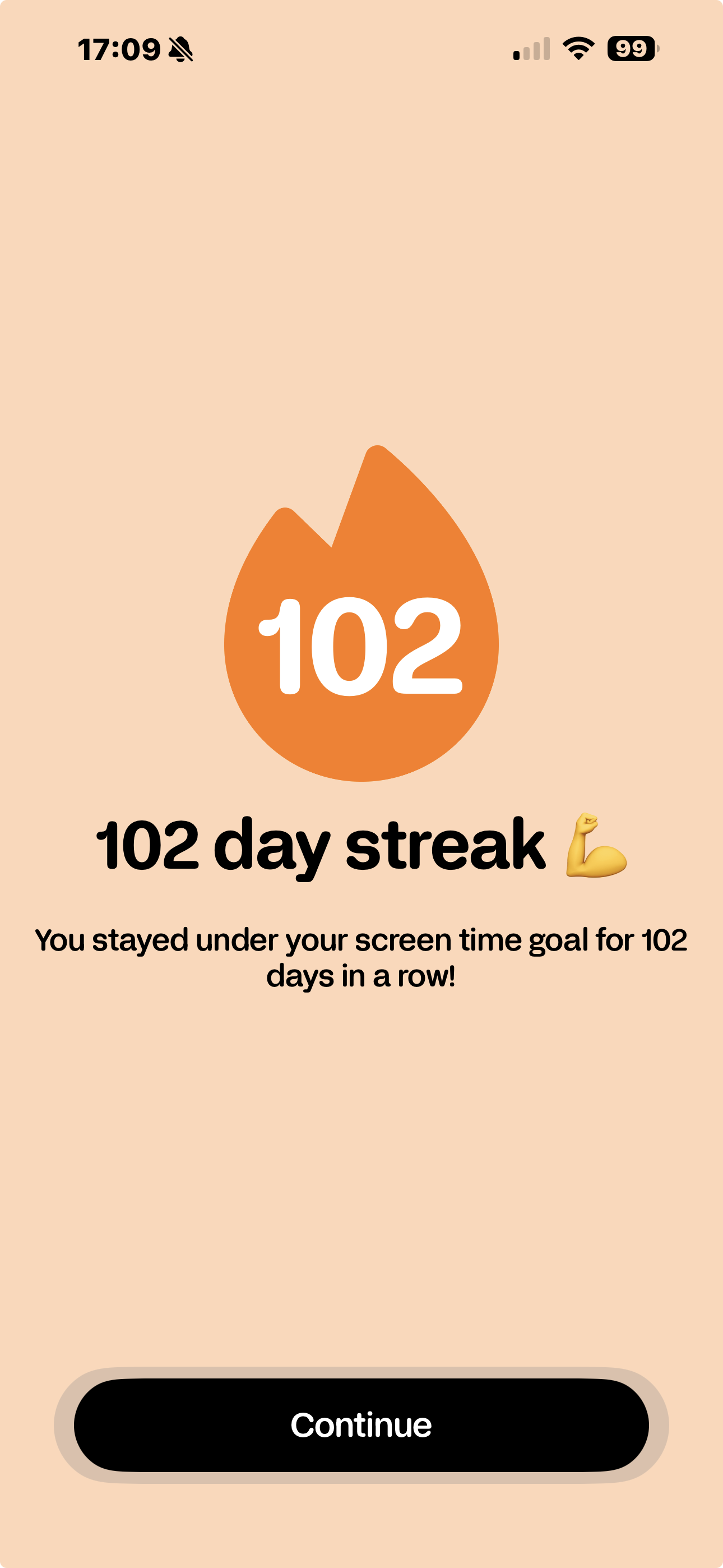
Image taken from the Be Simple App showing how many days not using Social Media
“You need an app… to stop using an app?”
My mum laughed when I told her, and I laughed too because it did sound slightly crazy. And yet I knew I wasn’t joking. Something hadn’t been feeling right for a while, and I could no longer ignore it.
I had begun to notice in myself a general sense of tiredness, the kind you might easily dismiss as part of a busy life. But over time, that tiredness began to take on a different quality. It became a heaviness, one that felt difficult to name but impossible to ignore. It felt as though my brain was being dragged behind me, as if I were pulling something heavy throughout the day. Even simple tasks required more effort than they should have done. Getting started on a task, and sustaining focus felt harder, and finishing something I had begun seemed to require a cognitive energy I didn’t quite have.
And then there was the scrolling.
I would pick up my phone almost automatically, like an extension of me. Open Instagram. Scroll. Pause. Watch something. Read something. Scroll again. And somehow, 30 minutes had passed and I could barely recall what I had actually taken in.
I remember the moment where I thought: Is this what addiction feels like? Even my sons noticed and proclaimed that I was the one with phone addiction!
That was the point at which I realised I needed to do something. So I downloaded Be Present, recommended by my husband. At first, I did what most of us probably do. I ignored it. I had not set it up correctly, which meant I could bypass the block… which, of course, I did.
There was no grand gesture. No dramatic “I am leaving social media forever” moment. Just an intentional decision to pause. Once I worked out how to actually block the app, I gave myself ninety days. Long enough to notice if anything shifted.
I am now on day 102.
They say it takes 90 days to change a habit. I have not yet unblocked it, though I ought to test the theory. However, there is a resistance inside me because something quite likes it this way.
I began to journal my thoughts and actions. I started to notice something I had not realised I was missing.
Space.
Space to think. Space to mind wander. Space to stay with a thought without being pulled away.
I felt curious about what was happening so I tried to make sense of it through a neurobiological lens.
We forget that attention is not neutral. It costs energy. The brain is constantly asking (often outside of our awareness) is this worth my energy? Because thinking, focusing, regulating ourselves… all of that is metabolically expensive.
So the brain filters.
At the centre of that filtering system is something called the salience network. I tend to think of it as the brain’s way of deciding what is important enough to notice, like a sorting bin. It is constantly scanning both the world around us and what is happening within us, quietly asking, does this matter… and do I need to respond?
When things are working efficiently, we can move between reflection and focus with ease, like toggling between the two networks. One moment thinking, the next moment doing.
But when I placed my own experience of social media into that lens, something clicked.
The content I was consuming was not neutral. It was fast, emotionally charged, often intense. And that is exactly the kind of information the brain is wired to prioritise. So my brain was not failing me. It was doing its job. It was repeatedly flagging, this matters, this matters, this matters.
The difficulty is that when everything feels important, the system never really gets to switch off.
And that is where I began to feel the cost.
It actually reminded me of something from years ago when my boys were little. That moment at the end of the day, between 5.00pm to 7.00pm, when they suddenly had a burst of energy yet I had nothing left to give, we would collapse in front of the television once they went to sleep. A winding down from the hectic day.
Scrolling had quietly become that same ritual.
Except instead of following a storyline, I was absorbing a stream of emotionally loaded, unpredictable content. Which meant I was often going to sleep with a nervous system that was still activated. And waking up feeling slightly on edge, not fully rested, already a little anxious.
Over time, I could feel this in my whole brain/body system.
At times, I felt a kind of hyper alertness where my body was slightly on edge and unable to settle.
At other times, it was the opposite. A heaviness, a brain fog and low energy.
I recognised those as shifts within my nervous system. I just didn’t feel like myself.
And alongside that, there was a clear sense of depletion. Constantly switching attention, re engaging with content, processing emotional information… all of it was drawing on my cognitive energy. And slowly, there was less left for the kind of thinking my work and my life needed.
When I stepped away, nothing dramatic happened overnight (in fact the temptation to scroll felt overpowering at times in the beginning.)
But slowly things began to shift.
I could stay with a thought for longer. Starting tasks felt easier. Finishing them felt possible again. The internal noise softened. And underneath it all, there was a sense of calm that had not been there for a long time.
Not because life had changed. But because something internally had.
And with that came a return to things I had missed. Reading properly. Thinking deeply. Creating with clarity and focus.
It has also made me reflect more broadly.
As adults, we are not separate from this. Our nervous systems are part of the environments our children grow up in. At a time where the world already feels quite loud, it is worth asking what we are asking our brains to hold.
This is where some of the research began to feel very close to home.
I came across the work of Sam Wass from the Baby Development Lab. His research focuses on infants and young children, so we need to be careful not to overextend it directly to adults. But it did get me thinking.
He talks about what happens when information enters the brain too quickly. The brainstem increases overall alertness, turning the volume up on the nervous system.
In simple terms, the faster and more intense the input, the more activated we become.
Some studies suggest that screen based content can stimulate the sympathetic nervous system, the part responsible for fight or flight. That really resonated with me.
An image - like a nerve cell firing
A constant low level activation. A subtle sense of being “on”, even when trying to rest was a very familiar feeling.
Wass also talks about the pace of content. In some children’s programming, scene changes can happen every one to two seconds, compared to around 16 to 17 seconds in more traditional television.
That difference really made me pause.
This kind of rapid change captures attention automatically. The brain does not choose to focus, it is pulled.
If infant and children’s developing brains are responding to this level of input, what could this mean for their attentional systems?
It brought me back to my own experience.
Scrolling through social media felt very similar. Constant movement. Constant novelty. No time to settle or process what I had just seen. No wonder I had not recollection of the content I had just consumed!
My attention was not resting anywhere. It was being repeatedly pulled.
When I place that alongside the salience network, it makes even more sense. My brain was being fed a stream of information that was fast, emotionally charged, and designed to stand out. Of course it kept flagging it as important.
The system was doing exactly what it is designed to do.
But it was doing it over and over again, without pause.
And over time, that created a kind of internal wear and tear.
I am not anti social media, and I do not think stepping away completely is the answer. What these 100 days have shown me, however, is just how much energy we use when we are constantly consuming emotionally charged information, often without realising it. It is the very energy we need to think clearly, regulate ourselves, and be fully present in our lives.
What surprised me most is how quickly something begins to return when we create even a little space. There is a sense of clarity, a calmness, and a reconnection with our own thinking that is difficult to ignore once you have felt it.
And this is where I now find myself holding a tension.
As a small business owner, I am very aware that presence matters. When you are not visible, it is easy to be forgotten, and there is a real need to show up. At the same time, I have come to value this spaciousness and the way it has allowed me to think, create, and work in a way that feels more aligned.
So my return feels more considered than before. Not a full jump back in, but a more intentional way of engaging, where I am paying closer attention to what I consume as well as what I share.
I am still working that out.
If you are navigating something similar, how are you finding that balance between being present online and protecting your own energy?
